A weekly review for men who want their actions to match their aim
Inspect the edge. Temper the steel. Return to the work.
Stop carrying the same friction into another week. Inspect what your actions revealed, correct what weakened the system, and choose the next useful strike.
- 20–30 minutes
- Weekly
- Printable
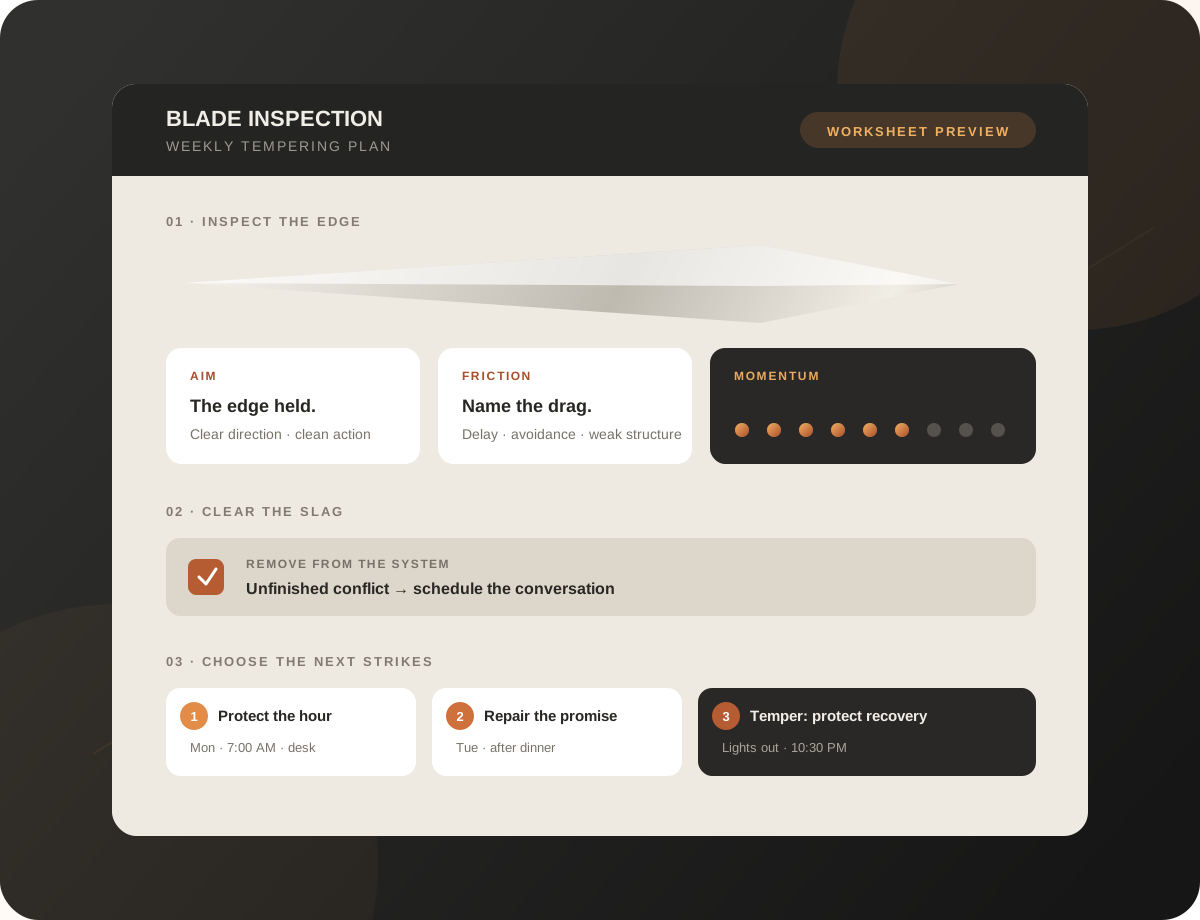
Every week leaves marks
Some actions sharpen you. Others dull the edge.
Pressure reveals the condition of the blade you carry. Work, marriage, fatherhood, health, habits, money, leadership, and private choices all give you feedback.
Without a process for studying that feedback, experience does not always become wisdom. A hard moment ends, but the pattern remains. The same week returns in a different form.
Life is tested through contact
The week already gave you feedback.
A difficult conversation ends.
Did the pattern underneath it change?
A promise gets broken.
Did you uncover the condition that caused it?
A strong moment creates hope.
Did you capture what made that action possible?
Inspection comes before correction
Study the structure beneath your results.
A smith does not strike steel at random. He studies the material first. Your weekly review follows the same discipline.
- 01Aim
The direction that guided your choices.
- 02Momentum
The movement your actions actually produced.
- 03Meaning
The moments that carried weight and significance.
- 04Values
The principles your behavior protected—or compromised.
- 05Responsibilities
The roles you carried and the care each one received.
- 06Friction
The drag that slowed or scattered your movement.
- 07Waste
What is consuming energy without producing value.
- 08Next strikes
The actions that deserve repeated, deliberate force.
- 09Recovery
The tempering required to remain strong and useful.
Read the edge honestly
Build on what held. Correct what dragged.
Where the blade held
Find the conditions behind clean action.
- You kept a promise.
- You handled pressure with restraint.
- You gave time to what mattered.
- You stayed present when escape was easier.
Name what supported these moments so strength becomes repeatable.
Where the blade dragged
Move from vague frustration to practical correction.
- Delay
- may reveal an unclear aim.
- Overthinking
- may reveal too many open choices.
- Irritability
- may reveal poor recovery.
- Avoidance
- may reveal fear.
- Repeated failure
- may reveal weak structure.
Clear what blocks the system
Remove the slag before it becomes obstruction.
Every working furnace produces waste. In life, it looks like resentment, guilt, comparison, unfinished conflict, broken promises, mental noise, and repeated excuses.
The plan gives you a place to name what is consuming energy, choose the correction, and stop carrying unnecessary weight forward.
What is consuming energy?
What action clears the blockage?
What does not enter next week?
Turn review into a tempering plan
Choose one area. Define three strikes.
Broad intentions do not reshape a life. Each action needs a point of contact, a time or trigger, and a specific result.
Choose the contact
The conversation, boundary, routine, repair, or focused block that matters now.
Fix the trigger
Give the action a day, time, place, or event that makes execution clear.
Name the formation
Define what this repeated action is intended to strengthen in you or your life.
- Protect one hour of focused work
- Have the delayed conversation
- Put the phone away during dinner
- Review money at a fixed time
- Train on scheduled days
- Repair a broken promise
- Strengthen one boundary
- Give one role full presence
Why tempering matters
Strength must be able to hold.
Steel can become hard and still remain weak. Too much force without recovery creates brittleness. Short-term output rises while the structure that carries the work begins to fail.
Tempering helps you protect the conditions that allow you to return. It separates discipline from self-destruction and keeps pressure useful.
Recovery is not the absence of formation. It is part of the process that makes formation sustainable.
What consistent use builds
Steady formation you can see in behavior.
- Actions connected to a clear aim
- Progress measured by results, not motion
- Behavior aligned with stated values
- Roles carried with greater care
- Repeated friction traced to its source
- Waste removed before it obstructs
- Specific action for the week ahead
- Recovery built into the process
- Visible patterns tracked over time
- Greater trust in your own word
Built for weekly use
Give reflection a fixed surface.
Set aside twenty to thirty minutes. Use the same day and place. Answer with facts.
- 01Review
Study what happened without defending it.
- 02Correct
Choose what leaves or changes in the system.
- 03Plan
Define the next useful strikes and their triggers.
- 04Return
Enter the next week with a clearer edge.
Over time, the record becomes evidence: where you are stronger, which roles receive your best energy, whether your values shape your calendar, and where the blade still bends.
This is for you if
You want structure, not another burst of motivation.
- You carry real responsibility.
- You feel the weight of unfinished change.
- Your actions do not always match your values.
- You want to become more reliable under pressure.
- You are willing to study patterns without defending them.
- You want progress that can be seen in behavior.
You do not need a perfect week. You need an honest inspection and the next useful strike.
What you receive
A complete weekly inspection system.
- 01Complete weekly review process
- 02Nine-point Momentum Scale
- 03Values and alignment review
- 04Responsibility rating system
- 05Friction and structure assessment
- 06Slag-clearing exercise
- 07Three-strike action plan
- 08Fixed anvil planning section
- 09Recovery and tempering section
- 10Final weekly calibration summary
- 11Printable landscape companion worksheet
One connected framework
From aim to action to formation.
Reveals your aim and meaning.
Holds values, roles, boundaries, and pressure.
Turns reflection into repeated action.
Reveals what your formation produces in real life.
Blade Inspection and Tempering Plan
Inspect what the week revealed. Choose the next strike.
Return to the work with a stronger edge.
Explore the process