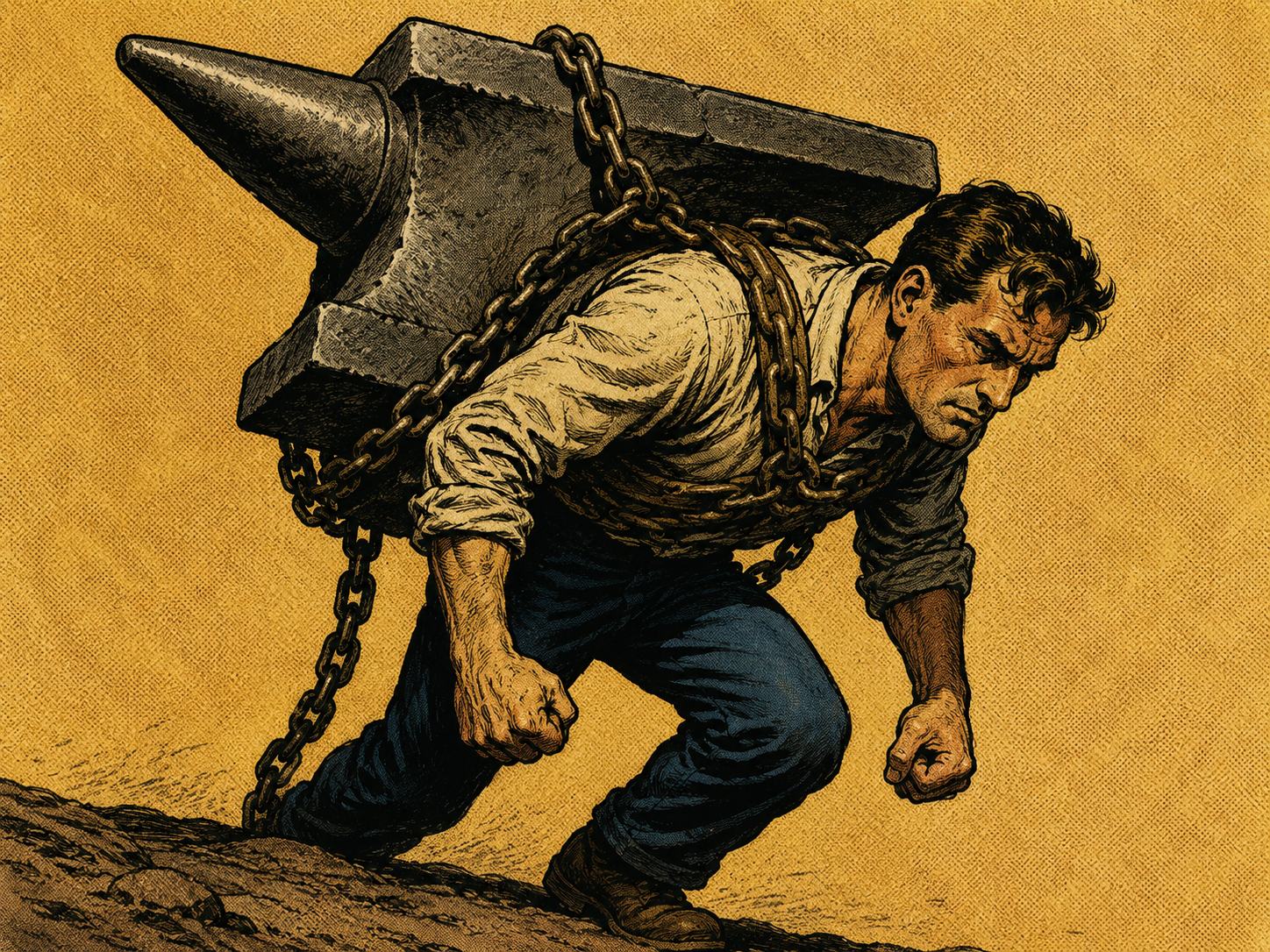
People like to imagine that quitting happens all at once.
A person reaches a breaking point, makes a decision, and walks away.
More often, the process is quieter. It begins long before any visible surrender.
The first step is usually an internal negotiation. You decide that today is an exception. The deadline can wait. The workout can move to tomorrow. The conversation can happen once everyone has cooled down. Each justification sounds sensible because each one contains a grain of truth. Life is difficult. Circumstances do change. Some delays are reasonable.
The danger lies elsewhere.
Every time pressure appears, a choice follows. You can absorb it and continue, or you can use it as grounds for retreat. Most people focus on the action they postponed. The more consequential event is the lesson they taught themselves in the process.
Pressure arrived. Retreat followed.
Repeat that sequence often enough and it becomes a habit of mind.
Many people treat pressure as an unwelcome disruption, something standing between them and the life they intend to live. Yet pressure is woven into the fabric of any meaningful pursuit. Raising children brings it. Building a business brings it. Marriage, ambition, responsibility, uncertainty—each generates demands that eventually collide with fatigue, boredom, doubt, or fear.
The challenge was never finding a life free of resistance.
The challenge is learning how to operate while resistance is present.
Hardship has a way of exposing realities that comfort conceals. A bridge does not reveal its weaknesses on a calm day. The flaws emerge when weight bears down on it. Human beings are no different.
Criticism reveals how dependent confidence is on approval. Failure reveals whether commitment survives disappointment. Conflict reveals how long someone can remain engaged when emotions run high.
Pressure rarely creates character from scratch. More often, it uncovers what was already there.
That is why perseverance is frequently misunderstood. It is celebrated as a rare trait possessed by a select group of extraordinary people. In reality, perseverance is less glamorous and more mechanical. It is the repeated act of continuing despite the presence of discomfort.
Discomfort itself is unavoidable. What separates one person from another is the meaning they assign to it.
For some, discomfort becomes evidence that they should stop. For others, it becomes part of the cost of admission.
The immediate appeal of quitting is obvious. Relief arrives quickly. The burden lifts. The tension recedes.
What remains hidden is the cumulative effect.
Avoidance trains expectation. It teaches a person what to do when things become difficult. Over time, those expectations harden into identity. Someone who repeatedly abandons commitments under pressure comes to see consistency as conditional. Effort depends on mood. Discipline depends on motivation. Progress depends on favorable circumstances.
That same person often continues to desire the rewards associated with discipline. They want the outcomes while rehearsing the behaviors that make those outcomes unlikely.
Much of the self-improvement industry attempts to solve this problem by supplying motivation. More inspiration. Better goals. Stronger reasons.
Those things help, but they explain far less than people assume.
Motivation is unstable. It rises and falls with energy, environment, and emotion. Any system built entirely upon it will inherit that instability.
The people who endure are not distinguished by permanent enthusiasm. They experience the same doubts, frustrations, and periods of exhaustion as everyone else. What differs is their response. They do not wait for a better emotional state before acting. They treat action as the requirement and emotion as the variable.
A parent caring for a sick child cannot postpone responsibility until inspiration returns. Neither can a surgeon, a soldier, or someone trying to keep a struggling business alive. The work remains. The pressure remains. They move anyway.
That ability changes a person.
The transformation rarely feels dramatic. It accumulates through repetition. A promise is kept on a day when breaking it would have been easier. A task is finished despite fatigue. A difficult conversation happens despite the temptation to avoid it.
Viewed individually, these moments seem insignificant. Viewed collectively, they become evidence.
Eventually, a person develops confidence rooted in memory rather than optimism. They know they can continue because they have continued before. Their self-image rests on experience, not aspiration.
This is how character forms.
Not through declarations. Not through intentions. Through repeated encounters with resistance and repeated decisions to remain engaged.
The popular image of grit often borders on mythology. It conjures visions of superhuman toughness, relentless intensity, or an indifference to pain.
Most endurance looks far less dramatic.
It looks like returning the next day.
It looks like staying with the conversation when leaving would be easier.
It looks like doing ordinary things under imperfect conditions for longer than most people are willing to.
Life does not eventually arrive at a stage where pressure disappears. New ambitions generate new demands. Success introduces obligations that failure never required. Every expansion of responsibility creates fresh points of friction.
The people who keep moving are not those who found a way around hardship. They stopped expecting hardship to be temporary.
They learned to treat pressure as part of the environment rather than evidence that something had gone wrong.
That shift changes the meaning of discipline.
Discipline is not performance under ideal conditions. Almost anyone can perform when conditions cooperate. The test arrives when they do not.
The question is whether the fire survives then.
In the end, the difference between those who begin and those who become is often nothing more mysterious than this: one group treats pressure as a reason to stop. The other learns to carry it.