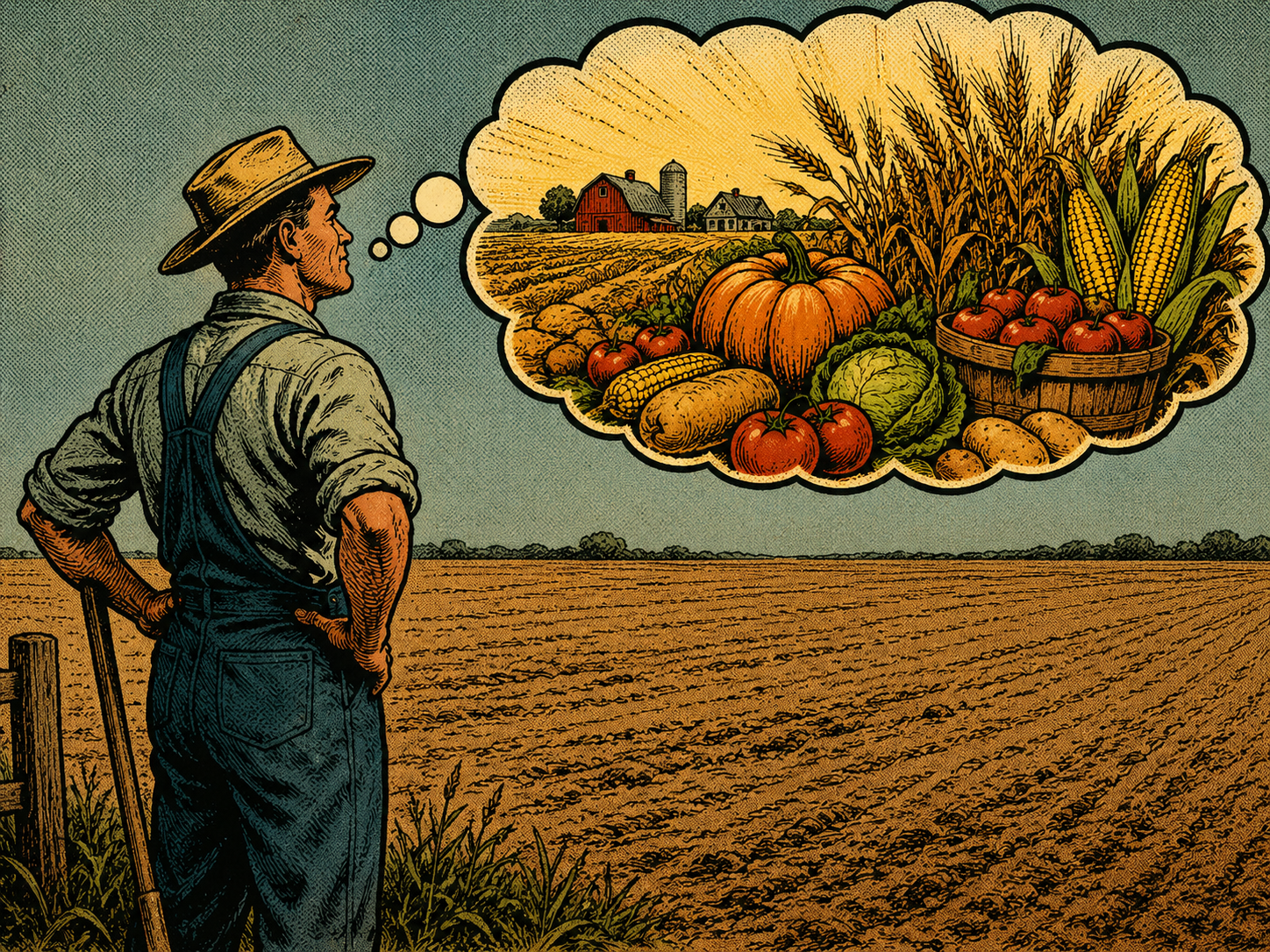
A farmer can stand at the edge of an empty field and dream about the harvest he wants.
He can picture rows of healthy crops. He can imagine the market where he will sell them. He can even decide exactly what he wants to grow.
Every field needs a direction before it can produce anything. But the decision is only the beginning.
The field still needs to be watered. Weeds need to be pulled. Fences need repair. The soil needs care. Day after day, the farmer returns to work that rarely feels exciting. Most of the harvest depends on what happens long after the decision has been made.
I think leadership and stewardship work the same way.
They are closely connected, but they are not the same.
Leadership is about choosing your direction.
Stewardship is about caring for what helps you stay on that path.
Leadership asks questions like:
- Where am I going?
- What kind of man do I want to become?
- What matters most?
- What deserves my attention?
- What do I need to say yes to?
- What do I need to say no to?
A leader decides. He chooses a direction and accepts the responsibility to move toward it.
Stewardship asks a different set of questions.
- Am I taking care of what I have?
- Am I using my time wisely?
- Am I protecting my health?
- Am I caring well for my family?
- Am I growing the gifts and opportunities I have been given?
A steward understands that every good thing in his life requires care.
His body needs rest and strength. His relationships need attention. His finances need discipline. His skills need practice. His time needs protection.
Here’s the interesting part.
Many people confuse these two ideas because they often appear together.
When someone talks about purpose, they usually mean leadership.
When someone talks about habits, routines, health, or discipline, they are usually describing stewardship.
Both matter, but they solve different problems.
Leadership answers, “Where should I go?”
Stewardship answers, “How do I remain capable of getting there?”
Without leadership, stewardship slowly becomes maintenance for its own sake.
A man may keep everything organized. His calendar is full. His finances are stable. His routines are consistent. Yet he never asks what all of that preparation is actually for. His life stays in order, but it lacks direction.
Without stewardship, leadership eventually burns itself out.
A man may chase meaningful goals with great energy. He works long hours. He takes on every opportunity. He pushes himself harder each year. Then his health begins to fail. His family grows distant. His attention becomes scattered. The direction was good, but he neglected the very things that made the journey possible.
This is where I think the fire, the furnace, and the forge become useful.
Leadership is your fire. It gives your life direction. It answers why you are moving.
Stewardship is your furnace. It protects that fire. It creates the conditions that allow your energy to last instead of burning out. Good sleep, healthy relationships, wise finances, disciplined habits, and protected time all become part of the structure that keeps the fire alive.
Over time, that protected fire reaches the forge.
Your work becomes useful to other people because you have built a life that can sustain itself. Your character becomes dependable because it has been shaped through repeated care, not occasional bursts of effort.
Most people do not lose their direction in one dramatic moment. They slowly stop caring for the things that support it.
The field dries out a little at a time. The fence stays broken a little longer. The weeds grow one day at a time until they become normal.
The harvest is rarely lost because of one bad decision. It is usually lost through neglected stewardship.
That is why leadership and stewardship belong together.
Leadership says, “This is the life I will build.”
Stewardship says, “I will care for everything that allows me to build it.”
When both are present, purpose gains endurance.
The farmer still begins by choosing what to plant.
But every harvest he enjoys months later comes from returning to the same field, again and again, caring for what makes growth possible.