
Break the Lies That Stall Your Progress
You are not stuck because you lack ability. You are stuck because an old story is still running your decisions.
You are not stuck because you lack ability. You are stuck because an old story is still running your decisions.

Progress stalls less from lack of skill than from the hidden sentence about identity that shapes risk, effort, and follow-through before action begins.

Men often mistake their stagnation for a discipline problem, but the deeper issue is lost internal heat; passion is the fuel that makes structure sustainable and effort alive.
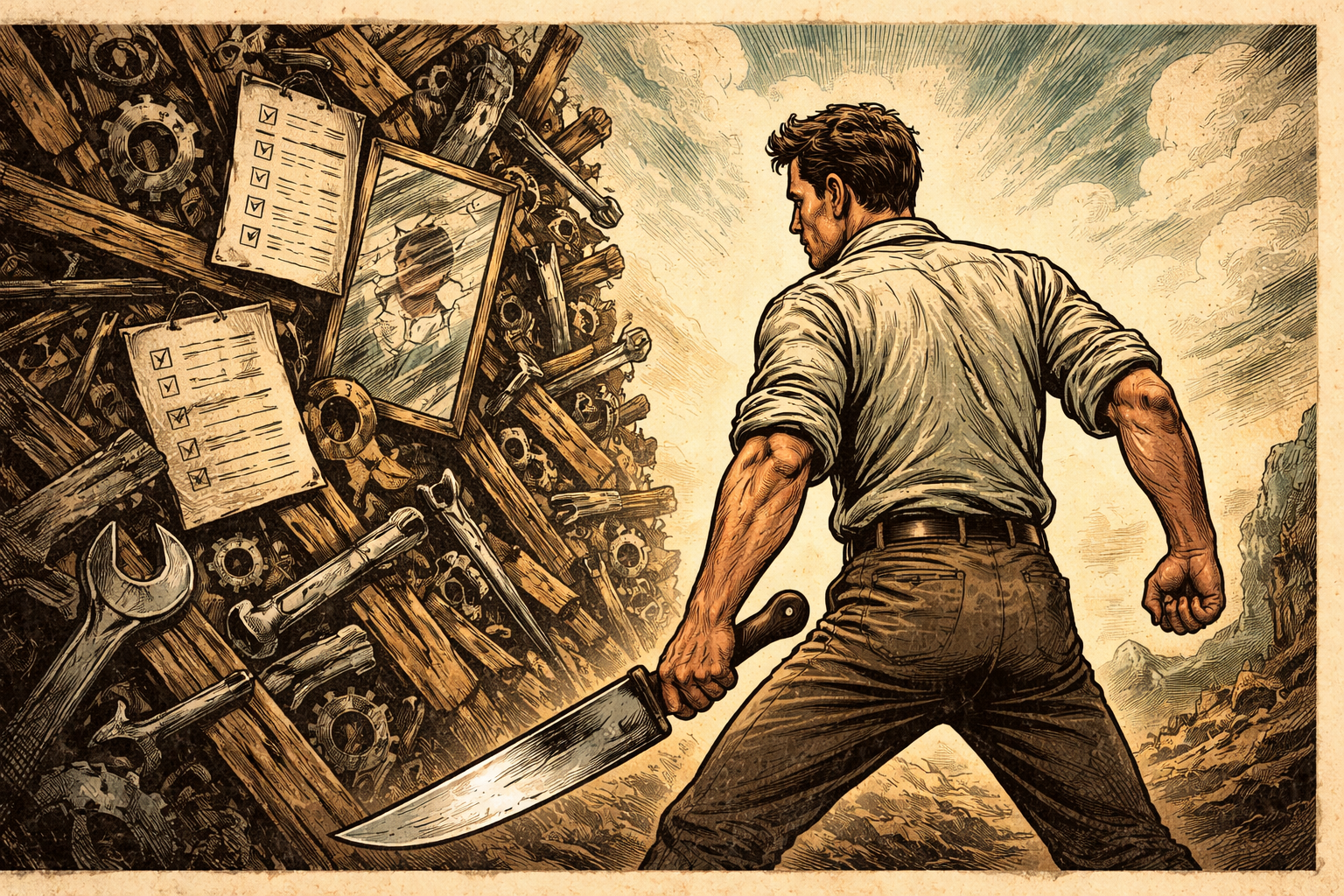
Most people stall by trying to fix every weakness; real progress comes from identifying core strengths, sharpening them, and deploying them where they create leverage.

The real threat to growth is not low motivation but repeated compromises against undefined values; lasting strength comes from naming and enforcing clear standards.

Lasting change starts with a baseline. Until you name the real structure of your life, effort stays scattered and progress stays unstable.
Week 1: Identify Your Starting Point Lecture: Every forging process begins with knowing the metal. This week, we take stock of who you are right now. Speak plainly about your current life – your roles, your habits, your fears, and your hopes. As men, we often charge forward without pausing to assess our starting point. But a warrior must know his current strengths and weaknesses before he can sharpen his blade. In this introductory session, emphasize the importance of brutal honesty and personal accountability. This isn’t about beating yourself up – it’s about establishing a baseline. You’re looking at the raw, unshaped metal of your life. A blade can’t be forged if you don’t first identify the raw material. By acknowledging exactly where you stand, you set the stage for genuine growth. Face the facts of your life like a man: directly and without excuses. This is your launching point for the journey ahead. Action: Write a no-nonsense self-assessment of your life as it stands today. Be honest and specific. Steps to Take: ...
Week 2: Unearth Your Core Values Lecture: A man’s values are the foundation of his blade. Just as quality steel determines a sword’s strength, your core values determine the strength of your character. This week, we dig into what truly matters to you at your core. Discuss how living in alignment with one’s values creates integrity, direction, and self-respect. In a direct tone, remind participants that if a man doesn’t stand for something, he’ll fall for anything. Identifying values isn’t touchy-feely – it’s a strategic move to define your moral compass. Use real examples: perhaps honor, loyalty, freedom, family, growth, or honesty. Urge men to think of moments in life when they felt deeply satisfied or terribly offended – those moments often reveal core values. By the end of this session, each man will have a short list of his fundamental values. These values will serve as guiding principles throughout the Steady Burn program and beyond. Action: Identify your top 3–5 core values – the principles that you commit to live by no matter what. Steps to Take: ...
Week 3: Identify Your Strengths – Sharpen Your Edge Lecture: Every blade has an edge – that part which cuts the best. In the context of personal identity, your “edge” is made up of your strengths, talents, and skills. This week, we focus on what you’re already good at and what comes naturally to you. Too often, men dwell on their shortcomings and forget to leverage their God-given or hard-earned strengths. Speak in a confident, affirmative tone: recognizing your strengths isn’t arrogance, it’s strategy. A warrior knows what weapon he wields best. Whether it’s physical strength, analytical thinking, creativity, empathy, or persistence – identifying these allows you to lean into them and stand out. Encourage participants to share skills or traits they’re proud of (this might feel awkward for some, but push through it with direct facilitation). By sharpening these edges, you can cut through challenges more effectively. Action: Inventory and celebrate your key strengths, then plan one way to use a top strength more deliberately this week. Steps to Take: ...
Week 4: Identify Your Passions – Ignite the Fire Lecture: A blade without fire cannot be forged. In a man’s life, passions and interests are the fire that heats your soul and drives you forward. This week, we examine what genuinely excites you and gives you energy. The tone here is enthusiastic but still grounded – we’re not talking about fleeting hobbies for distraction, but passions that give your life flavor and motivation. Discuss why it’s important for a man to know what lights him up: it combats the numb routine that leads to feeling stuck. Whether it’s a career path, a craft, a sport, a cause, or an art form, identifying your passions helps you steer your life toward purpose instead of just obligation. In the group, allow each man to speak about something he loves doing or learning about, and why. The goal is to reconnect (or connect for the first time) with genuine enthusiasm. A man with passion is a man with a furnace burning inside – and that heat will be crucial for the transformations to come. Action: Identify at least two passions or interests that energize you, and commit to engaging with one of them this week (even if just for an hour). Steps to Take: ...
Week 5: Expose Your Limiting Beliefs Lecture: Now we venture into the shadows where weaknesses hide – the impurities in the metal that must be burned off. These are your limiting beliefs: the doubts, fears, and negative self-talk that blunt your blade. This week’s session is about brutal honesty and courage. Speak in a firm tone: every man has an inner voice that sometimes whispers lies – “I’m not good enough,” “I always fail,” “I don’t deserve better.” These lies hold us back from our potential. To forge a mighty blade, you must expose and confront these beliefs. Draw the parallel to cleaning rust off a sword – it’s not pleasant to admit these things, but if we ignore them, they’ll corrode our progress. As an instructor, you may share a common limiting belief and how to challenge it, to set the example. The aim is not to wallow in negativity but to shine a light on it. Once identified, these false beliefs can be tested and shattered through action and evidence. Action: Identify one toxic belief or “old story” that has been holding you back, and challenge its truthfulness head-on. Steps to Take: ...
Week 6: Rewrite Your Personal Narrative Lecture: Up to now, we’ve been gathering pieces: values, strengths, passions, and identifying the lies that undermine us. This week, we forge these pieces together by rewriting your personal narrative. Many men live by a story defined by past failures or others’ expectations. Not anymore. This session is about taking control of your story like an author with a pen of steel. Emphasize that this is not fanciful “manifesting” talk – it’s a concrete re-assessment of who you are and what you stand for. You will take the insights from previous weeks and craft a new, empowering narrative that a man of honor and purpose can live by. Encourage frank discussion about the stories we inherit (from family, society) versus the stories we choose. State clearly: A man becomes what he believes himself to be. By articulating a better story, you begin living it. Approach this as a strategy to align mindset with the values and goals identified. This new narrative will serve as both shield and sword as you face future challenges. Action: Write a one-page “origin story” for yourself that reframes your past challenges as fuel and clearly states who you are becoming. Steps to Take: ...
Week 7: Define Your Identity – The Blade’s Blueprint Lecture: This week concludes the Identify the Blade phase. Having explored values, strengths, passions, and having challenged old beliefs, it’s time to consolidate these insights into a clear identity blueprint. Think of it as designing the blueprint of the blade you’re going to forge. A master smith sketches the sword before hammering metal; likewise, you will articulate who you are and what you stand for as a man. This is not a static label, but a declaration of your committed identity moving forward. Speak to the group with confidence: a man who knows himself can stride through life with direction and strength. Encourage each participant to share a concise statement or a few powerful words that capture their identity as they choose to define it now (for example: “I am a dependable leader and a compassionate father,” or “I am a warrior in training – disciplined, honest, and driven by purpose.”). Stress that this isn’t bragging or wishful thinking – it’s a statement of intent and truth. This identity definition will serve as a guiding star for the rest of the program, and it can be refined as they grow. It’s essentially naming the blade you will spend the next phases sharpening. Action: Draft a clear identity statement that combines your core values, your strengths, and your purpose. Declare in writing the kind of man you are (and are becoming) as a result of what you’ve learned about yourself. Steps to Take: ...
Week 8: Embrace the Beginner’s Mind Lecture: Mastery begins with being a student. This week’s theme is humility and the beginner’s mind. Too many grown men shy away from learning new things because it’s uncomfortable to be unskilled. But to master anything – whether it’s a skill, a process, or yourself – you must start at the beginning. Talk about famous masters (in sports, martial arts, business) who remained lifelong learners. Adopting a beginner’s mind means letting go of ego, being open to feedback, and committing to growth over pride. Stress that this is a strength, not a weakness: the man who thinks he already knows everything stagnates, while the man who admits he has much to learn can eventually surpass his former self. Use a confident yet encouraging tone: Drop pretenses, be coachable, and you will progress faster. This week, participants will choose an area where they’ll allow themselves to be beginners (or return to basics if they’ve plateaued). Action: Identify one area (skill or habit) where you will humble yourself as a learner, and commit to a specific practice to improve in that area starting this week. Steps to Take: ...
Week 9: Build a Morning Routine for Success Lecture: Structure starts at sunrise. This week, we drill into the power of a disciplined morning routine. A strong day is built on a strong start. Discuss how the first hour after waking can set the tone for everything else. Use direct language: instead of hitting snooze and stumbling into your day reacting to problems, a man of mastery owns his morning. Whether it’s through exercise, planning, reading, or simple quiet coffee time – a deliberate morning routine grounds you in control and purpose. You might cite examples of successful men known for their morning practices (without fluff – focus on the discipline aspect). Emphasize consistency over intensity: a simple routine done every day beats an elaborate one done rarely. By designing and sticking to a morning plan, participants will experience improved focus and self-mastery. Remind them: Win the morning, win the day. Action: Design and commit to a consistent morning routine that primes you for a productive, focused day. Steps to Take: ...
Week 10: Master Your Physical Self Lecture: A warrior’s blade is only as strong as the arm that wields it. This week, we focus on physical mastery – taking charge of your body through exercise, diet, and recovery. The tone should be motivating and firm: no more neglecting your health or half-hearted efforts. A man grounded in mastery treats his body as his personal weapon and armor. Draw direct connections between physical discipline and confidence or mental strength. For example, pushing through a tough workout trains the same grit needed to push through life’s challenges. Emphasize that you don’t have to be an elite athlete, but you do need to establish consistent physical training and care. Use straightforward language: Get stronger, get healthier – no excuses. The group can discuss different fitness activities (weightlifting, running, martial arts, sports) and nutrition basics, focusing on what habits are sustainable for each person. The objective is for each man to upgrade his physical routine to better support his life mission. Action: Implement a concrete fitness and health plan this week – decide your exercise schedule, clean up one aspect of your diet, and set a consistent sleep pattern. Treat your body like the important project it is. Steps to Take: ...
Week 11: Master Your Mind and Emotions Lecture: Just as important as physical training is mental mastery. This week delves into strengthening your mind and gaining emotional control. A man grounded in mastery isn’t a slave to every impulse or passing mood – he cultivates focus, resilience, and emotional intelligence. Speak directly: mental toughness and emotional balance are skills, built through practice like muscles. Introduce practical techniques such as meditation or breathing exercises for focus, and journaling or reflection for emotional clarity. Emphasize that mastering your mind doesn’t mean suppressing feelings into stoicism; it means acknowledging them without being ruled by them. For example, feeling anger but choosing your response calmly, or feeling doubt but proceeding with courage. Discuss how practices like daily meditation or even prayer (if appropriate for the individual) serve as a forge for the mind – burning away distractions and sharpening concentration. The message: control your mind, or it controls you. Participants will experiment with a daily mental discipline habit this week to start building this inner mastery. Action: Adopt a daily mental discipline practice (such as meditation, focused breathing, or mindful journaling) to train your mind to be calmer and more focused under stress. Steps to Take: ...
Week 12: Build Strong Habits (Consistency is King) Lecture: Mastery isn’t built in a day – it’s the product of consistent habits. This week, we zoom out to the meta-skill of habit formation. The goal is to help each man consciously build positive habits (and break bad ones) to reinforce everything he’s striving for. Drive home a key truth: nearly 40% of our daily actions are habitual[1], done without thinking, so if we engineer those habits to be good ones, our life will run in the right direction on autopilot. Use a pragmatic tone: there’s nothing mystical about habits; they’re loops we can reprogram with repetition and reward. Introduce simple habit-building strategies – like starting small, anchoring new habits to existing routines (e.g., do 20 pushups after brushing teeth), and tracking progress. Also mention eliminating “keystone” bad habits that drag you down. The mantra here: Consistency is king. A mediocre plan done daily trumps a perfect plan done occasionally. Encourage the group to share one habit they really want to instill and brainstorm how to make it stick. By intentionally crafting habits, participants ground their progress in daily reality instead of fleeting motivation. Action: Choose one positive habit to build (or a bad habit to break) this week, and implement a specific strategy to ensure it sticks – track it, schedule it, and tie it to an existing routine. Steps to Take: ...
Week 13: Embrace Discipline – Do it Regardless Lecture: This week we confront the backbone of mastery: discipline. All the plans and goals in the world mean nothing without the discipline to execute them consistently. Speak in a no-excuses, almost military tone (but supportive): a man must sometimes do what needs to be done especially when he doesn’t feel like it. Define discipline as the ability to keep commitments to yourself, to push through discomfort, and to maintain focus on your long-term benefit over short-term impulse. Use straightforward examples: getting up early to train when you’d rather sleep, saying no to temptations that violate your goals, completing that tedious task at work instead of procrastinating. Emphasize that discipline is a muscle – the more you exercise it, the stronger it gets. Also clarify that discipline equals freedom in the long run; by disciplining yourself, you gain control over your destiny rather than being controlled by whims[2]. Encourage participants to share a situation where discipline paid off for them. This week’s practice is about deliberately doing something hard or sticking to a routine because it’s the right thing, not because you feel like it. Mastery is forged in those uncomfortable moments. Action: Choose one task or commitment that you tend to avoid and execute it with full discipline this week, no excuses. Prove to yourself that your will is stronger than your mood. Steps to Take: ...
Week 14: Learn from the Masters (Seek Mentorship & Knowledge) Lecture: Even the greatest swordsmen learned from a master or studied techniques from those who came before. This week focuses on mentorship and continuous learning. A man grounded in mastery recognizes he doesn’t have all the answers and actively seeks wisdom from others more experienced. Discuss the value of finding mentors – people who have achieved what you aspire to – and learning from them. That can mean an in-person mentor, a coach, or even “virtual” mentors through books, lectures, and biographies. Encourage participants to drop any ego that prevents them from asking for guidance or investing time in learning. Direct tone: If you want to cut years off your learning curve, learn from those who’ve already walked the path. Also, emphasize building a “library” of knowledge – reading good books or taking courses is essentially mentorship at scale. This week, each man will identify at least one mentor or knowledge source to tap into. By learning from masters, you ground yourself in proven principles and accelerate your journey to mastery. Action: Reach out to a mentor or begin studying a master in a field you want to improve in. This week, take a concrete step to learn from someone more experienced. Steps to Take: ...