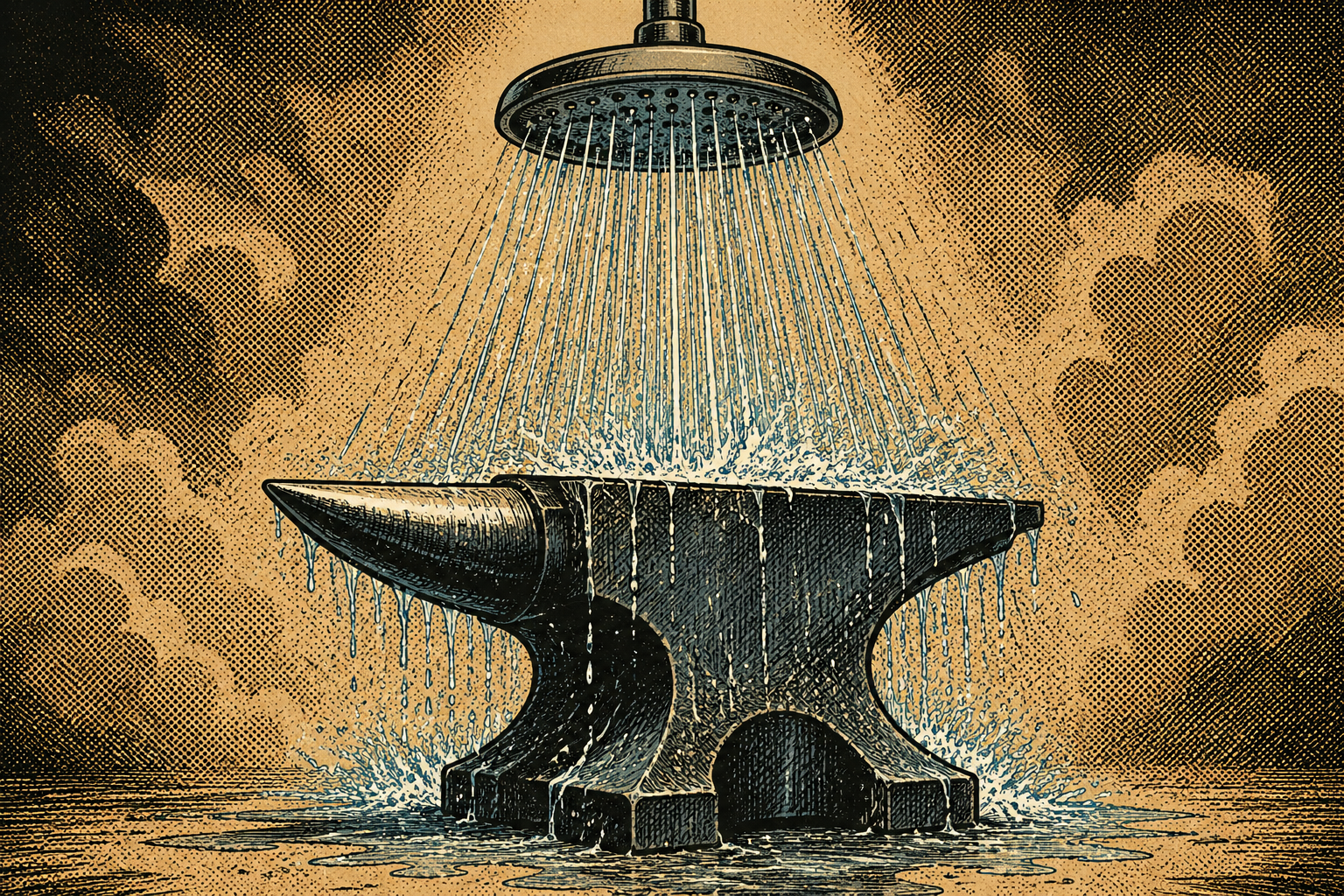
The Slow Death of Friction
Many people today are exhausted not because life has become uniquely brutal, but because they have drifted out of contact with ordinary forms of difficulty. Modern life has become remarkably effective at removing friction from daily existence while asking for ever greater reserves of emotional stamina. Comfort has advanced faster than resilience.
The result is a strange imbalance. We spend much of life avoiding inconvenience, boredom, strain, awkwardness, silence, uncertainty—then act surprised when ordinary pressure flattens us. A delayed email can derail an afternoon. A difficult conversation acquires the emotional weight of catastrophe. Minor disruptions feel intolerable because the threshold for discomfort keeps dropping.
For most of human history, people did not organize life around minimizing every irritation. Cold mornings were unavoidable. So was waiting, physical exertion, social dependency, boredom. None of this made earlier societies morally superior, and there is no reason to romanticize hardship. Indoor plumbing is better than hauling water. Antibiotics are better than dying young. Convenience is one of civilization’s genuine achievements.
Still, every gain changes the people who inherit it.
A body shielded from resistance weakens. Muscles soften. Bones lose density. Immune systems become reactive when they encounter too little exposure. Human psychology appears to work by a similar logic. A person who never practices endurance becomes less capable of it.
The Difference Between Stress and Suffering
That does not mean suffering is ennobling. Chronic stress wrecks people. Poverty depletes them. Trauma leaves scars that can last decades. There is nothing character-building about chaos imposed without choice or relief.
But chosen difficulty is different from imposed misery.
A hard workout is not abuse. Fasting for a day is not starvation. Training for a marathon is not fleeing danger. Agency changes the experience. So does meaning.
The interesting part of voluntary discomfort is rarely the activity itself. It is the theater inside the mind beforehand. Before cold water, the brain starts forecasting disaster. Before public speaking, it manufactures escape routes. Before exercise, it suddenly discovers compelling reasons to postpone effort until tomorrow.
Then the thing begins, and reality turns out to be smaller than anticipation.
That gap teaches something important. The nervous system learns that discomfort and danger are not synonyms. Confidence stops being abstract. It becomes evidence-based.
Psychologists sometimes call this stress inoculation: repeated exposure to manageable strain increases tolerance for future strain. The principle appears everywhere. Soldiers train under pressure because panic destroys performance. Therapists treating phobias rely on gradual exposure rather than permanent avoidance. Athletes improve by submitting themselves to stress and recovering from it.
Avoidance offers relief in the short term, but it quietly expands fear. The person who dodges difficult conversations becomes more anxious about confrontation. Someone who never exercises experiences mild exertion as intolerable. Comfort narrows the range of what feels survivable.
The Economy of Immediate Relief
Technology has accelerated the cycle. Every unpleasant emotion now arrives with an immediate exit ramp. Silence gets filled with headphones. Loneliness dissolves into scrolling. Restlessness disappears into stimulation. The modern economy excels at interrupting discomfort before a person has the chance to discover it might pass on its own.
That lost discovery may matter more than we think.
Not every anxious thought requires escape. Not every craving deserves satisfaction. Human beings adapt remarkably well when adaptation is allowed to happen. But adaptation requires exposure. Endurance cannot develop in permanent retreat.
This helps explain the appeal of things that seem irrational in affluent societies: cold plunges, endurance races, fasting, intense training programs, rigid routines. On the surface, they look like self-inflicted suffering. In reality, they are attempts to recover a sensation modern life increasingly withholds—the feeling of becoming capable.
The appeal is not pain for its own sake. It is reassurance.
Not reassurance that life will become easier. Reassurance that one can meet difficulty without collapsing.
The Problem With Modern Toughness
There is an obvious objection here. Plenty of people already feel crushed by work, finances, caregiving, instability, or chronic stress. The culture hardly suffers from a shortage of burnout. Advising exhausted people to seek additional hardship can sound detached from reality.
And often it is.
Some forms of stress simply grind people down. There is nothing admirable about relentless insecurity. But the answer to that truth is not the elimination of all challenge. It is the recovery of chosen challenge—small, controlled encounters with resistance that restore a sense of agency.
Many modern lives contain anxiety without preparation. Pressure without training. Stimulation without discipline. People endure large, uncontrollable stresses while avoiding smaller voluntary ones that might increase their capacity to handle the larger kind.
What the Cold Water Actually Changes
A cold shower matters because it reverses that pattern.
The first morning, the cold feels insulting. Not dangerous. Not even especially painful. Just wrong in a way the body rejects before the mind can weigh in. Your shoulders tighten. Your breath shortens. One hand twitches toward the faucet almost on instinct, hunting for warmth with the urgency of a much larger crisis. The surprise isn’t the temperature. It’s how quickly the brain interprets a minor discomfort as an emergency.
A few days later, the reaction changes.
The water is no warmer. The shock still lands. But the negotiation ends sooner. You stop standing at the edge rehearsing objections. You step in. What seemed intolerable on Monday becomes, by Thursday, merely unpleasant.
It is a trivial act with a larger implication: choosing discomfort before discomfort chooses you.
That principle extends far beyond cold water. Someone who practices difficult conversations becomes steadier in conflict. Someone who trains consistently develops a different relationship to fatigue. Discipline in one corner of life tends to spread because repeated action alters self-perception. Eventually the internal narrative changes. The thought is no longer this is unbearable. It becomes I know how to carry this.
Real confidence works that way. It is not manufactured through affirmations or self-esteem campaigns. It comes from surviving things that once seemed impossible and discovering, afterward, that you remained intact.
Modern culture often treats personal growth as a matter of self-expression. But many of the qualities people most admire in others—calmness under pressure, patience, resilience, composure—are built less through expression than through exposure. They emerge from repeated contact with strain, uncertainty, embarrassment, effort.
The goal is not hardness for its own sake. Nor is it emotional numbness. A healthy person is not someone incapable of feeling discomfort. It is someone no longer frightened by every encounter with it.
The water never becomes warm.
You just stop treating the cold like a catastrophe.