The Moment You Decide to Stay Quiet
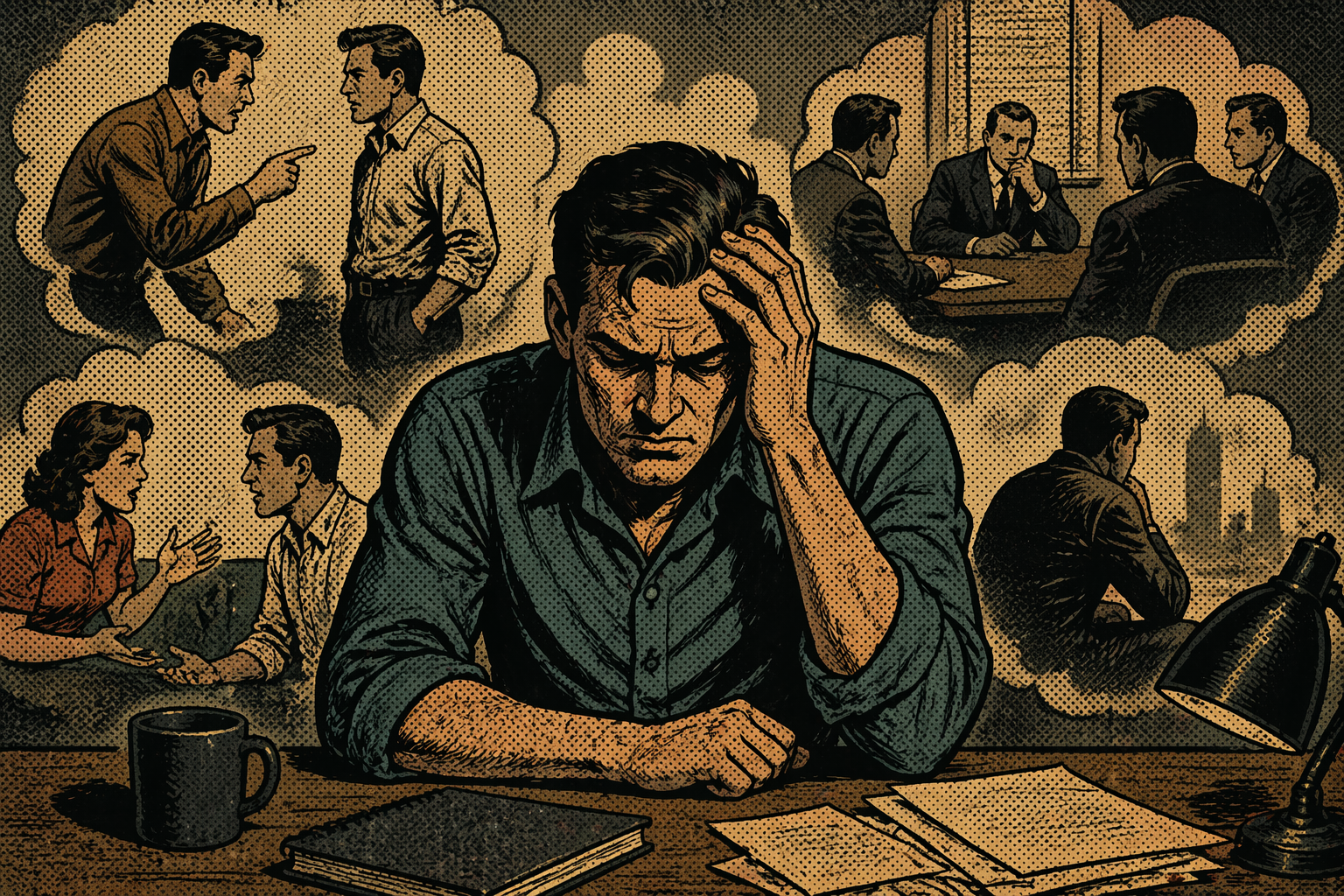
A man sits in a meeting, watching a decision unfold that will affect his work for the next six months. He knows the plan has a flaw. He can see where it will break. He even feels the tension in his chest, the small internal signal that something needs to be said.
He waits.
Someone else speaks, though not to fix the problem. The conversation moves forward. The moment passes. The plan locks in place.
Hours later, the same man replays the scene in his head. The words arrive too late, now clean and precise. He imagines how easily he could have said them. The outcome might have shifted. The respect in the room might have changed.
Instead, the silence remains. The problem remains. And so does the quiet erosion of his own authority.
Silence Reshapes Identity Before It Solves Conflict
Avoided conflict does not preserve stability. It reshapes identity.
Each time a person withholds a necessary truth, the immediate reward is relief. No friction. No discomfort. No risk of confrontation. The cost appears minimal in the moment.
Over time, that pattern builds something else. It builds a version of the self that steps back rather than forward, that absorbs tension rather than directing it. Others begin to recognize it, often before the individual does. They speak over him more easily. They loop him in later. They assume agreement where there is only silence.
Conflict, then, functions as a sorting mechanism. It reveals who can carry pressure and who redirects it inward. The difference has less to do with personality and more to do with behavior under strain. Speaking clearly during tension establishes position. Avoiding it dissolves position.
The issue extends beyond any single conversation. It defines how a person is read in every room that follows.
The Structure Beneath a Simple Conversation
Most people treat conflict as a spontaneous event, something that erupts and must be handled in the moment. That view creates inconsistency. Sometimes the response is calm. Other times it is reactive or absent.
Clear communication under pressure follows a structure, even when it appears natural.
The first step is specificity. Vague language weakens impact. A statement like “this isn’t working” creates confusion. A clear observation anchors the conversation: a decision changed, a deadline moved, a responsibility shifted.
The second step connects that fact to consequence. Impact gives the statement weight. It explains why the issue matters without turning it into an accusation. The focus remains on effect rather than blame.
The third step establishes direction. A future expectation replaces the past problem. Without this, the conversation stalls in explanation. With it, the interaction becomes a point of adjustment.
Then comes the pause. Allowing response introduces friction, but it also reveals alignment or resistance. Listening here is not passive. It gathers information.
The final step is steadiness. A boundary stated once often needs to be held more than once. Calm repetition carries more force than escalation. It signals that the position will remain.
This sequence appears simple. Its difficulty lies in execution under pressure. The mind seeks escape. The body signals risk. Without a clear pattern to follow, silence or reaction takes over.
Why Avoidance Feels Rational
Avoiding conflict carries a logic that feels sound.
It protects relationships, at least on the surface. It prevents escalation. It avoids the unpredictable response of another person. In environments where authority is uneven or stakes are high, silence can appear strategic.
This reasoning holds in the short term. It reduces immediate discomfort and maintains a sense of control.
The longer view tells a different story.
Unspoken issues accumulate. Small misalignments become structural problems. Resentment grows in private while cooperation weakens in public. The relationship that silence aimed to protect becomes less stable, not more.
Avoidance also distorts perception. Others interpret silence as agreement or indifference. They adjust their behavior accordingly. The original concern becomes harder to raise later because the pattern has already been set.
The rational choice in the moment creates an irrational outcome over time. Stability requires clarity. Clarity requires expression.
The Weight of a Spoken Line
A single sentence, delivered at the right moment, often carries more influence than prolonged effort after the fact. It defines a boundary, redirects a plan, or signals a standard.
The hesitation before speaking rarely reflects a lack of knowledge. It reflects uncertainty about consequence. What will happen if I say this? How will it be received? What will change?
These questions point to risk. They also point to the function of conflict.
Conflict, handled directly, aligns reality with expectation. It corrects drift. It prevents small errors from scaling into larger failures. It establishes presence.
The man in the meeting faces the same choice each time the moment appears. Speak with clarity and accept the immediate tension, or remain silent and absorb the long-term cost.
The pattern of that choice defines how others respond to him and how he responds to himself.
A Position Declared or Surrendered
The earlier moment returns in different forms. A conversation with a partner. A decision at work. A boundary crossed by a friend. The context shifts. The underlying choice remains.
Speaking clearly during conflict establishes position. It signals that pressure will be met with direction. Silence under pressure erodes that position, slowly and consistently.
The difference between the two paths accumulates. One builds authority through repeated, steady expression. The other disperses it through repeated restraint.
The man in the meeting does not lose authority in a single moment. He yields it in increments, each time the signal to speak is ignored.
Clarity in conflict restores that authority. It aligns action with awareness. It turns internal tension into external direction.
The cost is immediate discomfort. The return is long-term stability, both in how others engage and in how a person understands his own role in the room.