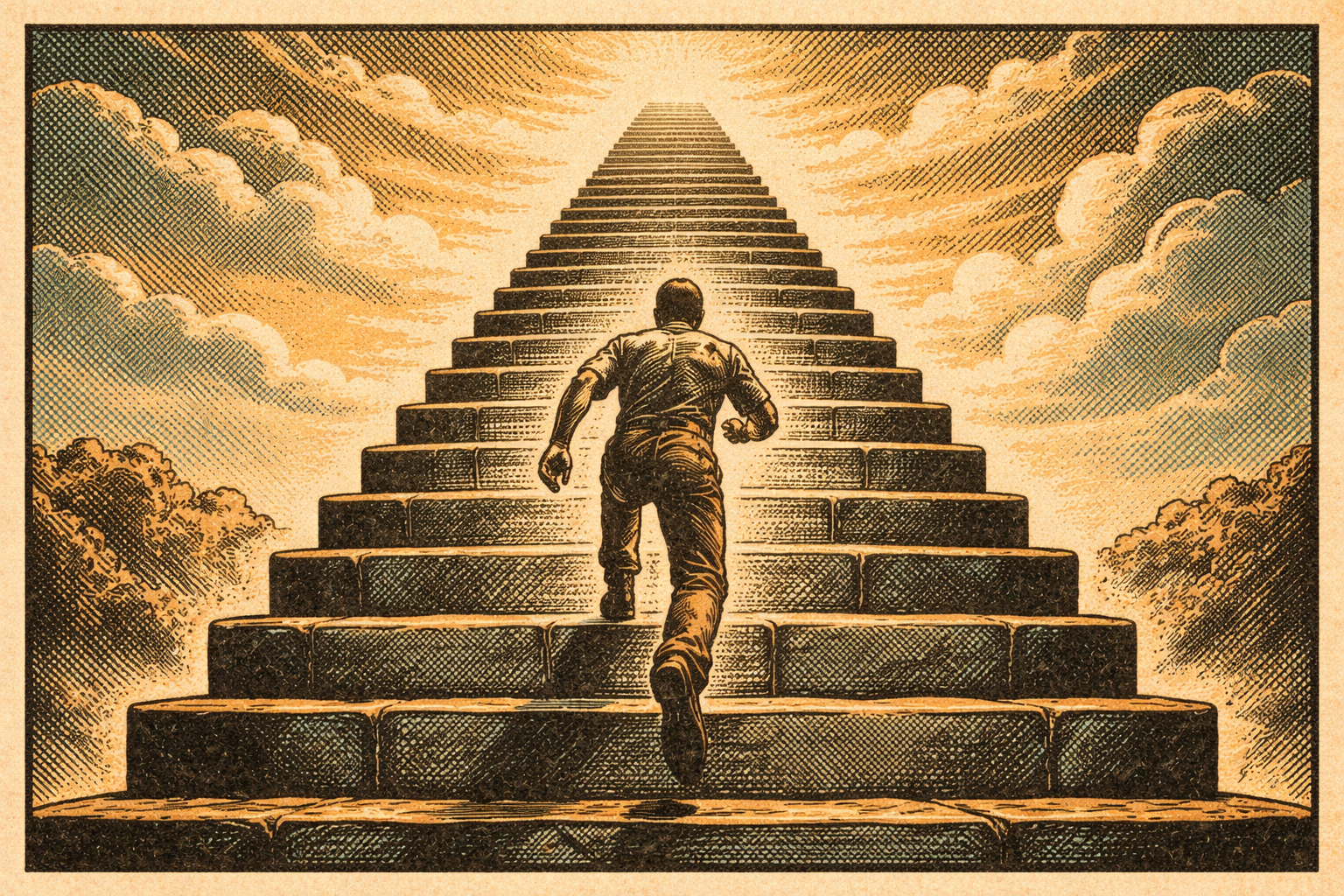
The Morning Argument No One Wins
At 5:59 a.m., the alarm goes off and the debate begins.
It is a quiet debate, almost polite at first. You went to bed late. You trained hard yesterday. One more hour would not ruin anything. The bed is warm. The house is still. No one would know.
In that dim light, the case against rising sounds reasonable. It speaks in the voice of care, of balance, of earned rest. It is rarely dramatic. It does not shout. It persuades.
Most mornings, the debate is not about sleep. It is about authority. Who decides what happens next, your intention or your impulse?
The outcome of that small exchange shapes more than the next hour. It shapes the day. And repeated often enough, it shapes the person.
Discipline Is Not Harshness but Self-Government
We tend to treat discipline as a personality trait, something some people are born with and others lack. We praise the disciplined as exceptional, almost severe. We forgive ourselves for inconsistency by assuming we are simply not built that way.
But discipline is not a temperament. It is a structure.
More precisely, discipline is the practice of self-government through rules that do not change when feelings do. It is the ability to keep commitments to yourself, especially when doing so is inconvenient. Beneath the surface of daily habits, what is at stake is not productivity but sovereignty.
The modern struggle with discipline is not about laziness. It is about living in a culture that has elevated preference over principle. We are told to listen to ourselves, to honor how we feel, to move when we are inspired. That advice works well for expression. It fails in the domain of execution.
The real problem is not that people do not want better bodies, stronger finances, or deeper competence. It is that they attempt to build those outcomes on unstable ground. They rely on motivation, which rises and falls with sleep, stress, praise, and weather. When motivation dips, the structure collapses.
Discipline, understood correctly, is the creation of an anvil. It is a stable surface against which effort can strike. Without that surface, effort scatters. With it, force becomes form.
The Structure Beneath Mastery
Consider the person who wakes early to train before work. From the outside, this looks like grit. From the inside, it is often simpler. The alarm rings. The feet hit the floor. There is no meeting. There is no vote. The rule has already been decided.
The same pattern appears in less visible domains. The worker who finishes the tedious report before checking email. The parent who sets aside money before spending it. The student who studies at the same hour every evening. In each case, the defining feature is not enthusiasm. It is structure.
Psychology has long observed that habits reduce cognitive load. A decision made in advance does not have to be made again. By turning an intention into a rule, a person reduces the daily cost of willpower. The mind does not have to argue each morning about whether training is worth it. The argument has already been settled.
This matters because identity is shaped less by what we intend than by what we repeatedly do. A man who plans to save but spends impulsively does not become financially stable by desire. A woman who intends to write but waits for inspiration does not become an author by imagination. Repetition, anchored to structure, creates identity.
Over time, something shifts. The early alarm is no longer heroic. It is normal. The savings transfer is no longer impressive. It is automatic. The hard conversation is no longer avoided. It is handled.
Discipline, in this sense, produces freedom. Not the freedom to do whatever feels good in the moment, but the freedom to direct your own trajectory. A body trained consistently moves differently. A bank account funded consistently offers options. A reputation for reliability opens doors. These freedoms are built quietly, one kept rule at a time.
The Seduction of Motivation
Many believe that discipline is too rigid, that it squeezes joy out of life. They argue that creativity, balance, and mental health require flexibility. If you push yourself constantly, you risk burnout. If you follow rules too strictly, you become brittle.
Endless strain without recovery can damage both body and spirit. But this critique often misidentifies the problem.
Burnout is rarely caused by structure itself. It is more often caused by chaos. When goals are unclear and expectations shift daily, the mind never rests. When sleep, work, and leisure are unbounded, each bleeds into the other. The result is not freedom but fatigue.
Moreover, reliance on motivation is not gentler. It creates cycles of intensity and collapse. A burst of effort follows a surge of inspiration. When the surge fades, guilt sets in. The next burst must be larger to compensate. This rhythm is more exhausting than steady discipline.
Structure, properly chosen, does not eliminate flexibility. It defines priorities. A rule to train three mornings a week leaves four for rest. A rule to save a fixed percentage of income leaves the remainder for enjoyment. A rule to write daily for thirty minutes does not forbid long walks or dinners with friends. It simply protects what matters most.
The objection confuses discipline with severity. In reality, discipline is consistency.
The Quiet Power of Kept Promises
The morning debate at 5:59 a.m. is not trivial. It is a referendum on who governs your life. If the answer changes daily, so does your direction.
The broader implications are cultural as well as personal. In workplaces, reliability often outweighs brilliance. In relationships, follow-through builds trust more than grand gestures. In civic life, stable commitments sustain institutions. The habit of keeping one’s word to oneself trains the habit of keeping one’s word to others.
This is why discipline matters beyond the gym or the savings account. It is the mechanism by which intention becomes reality. Without it, plans remain drafts. With it, plans harden into outcomes.
We often search for dramatic transformations. We want new routines, new systems, new identities. But the essential shift is quieter. It is the decision to establish a rule and obey it, especially when no one is watching.
The alarm will ring again tomorrow. The debate will begin again. The voice of comfort will make its case. What determines the future is not how persuasive that voice sounds, but whether you have already chosen who has the final word.
Discipline is not about punishing yourself. It is about ruling yourself. And in a world that constantly invites you to drift, that form of rule may be the most durable freedom available.